Mind the Waste.
A fridge magnet that keeps an eye on what is quietly going off. It sits on the door, watches the conditions inside, and tells your team which shelf to use up before it becomes bin weight.
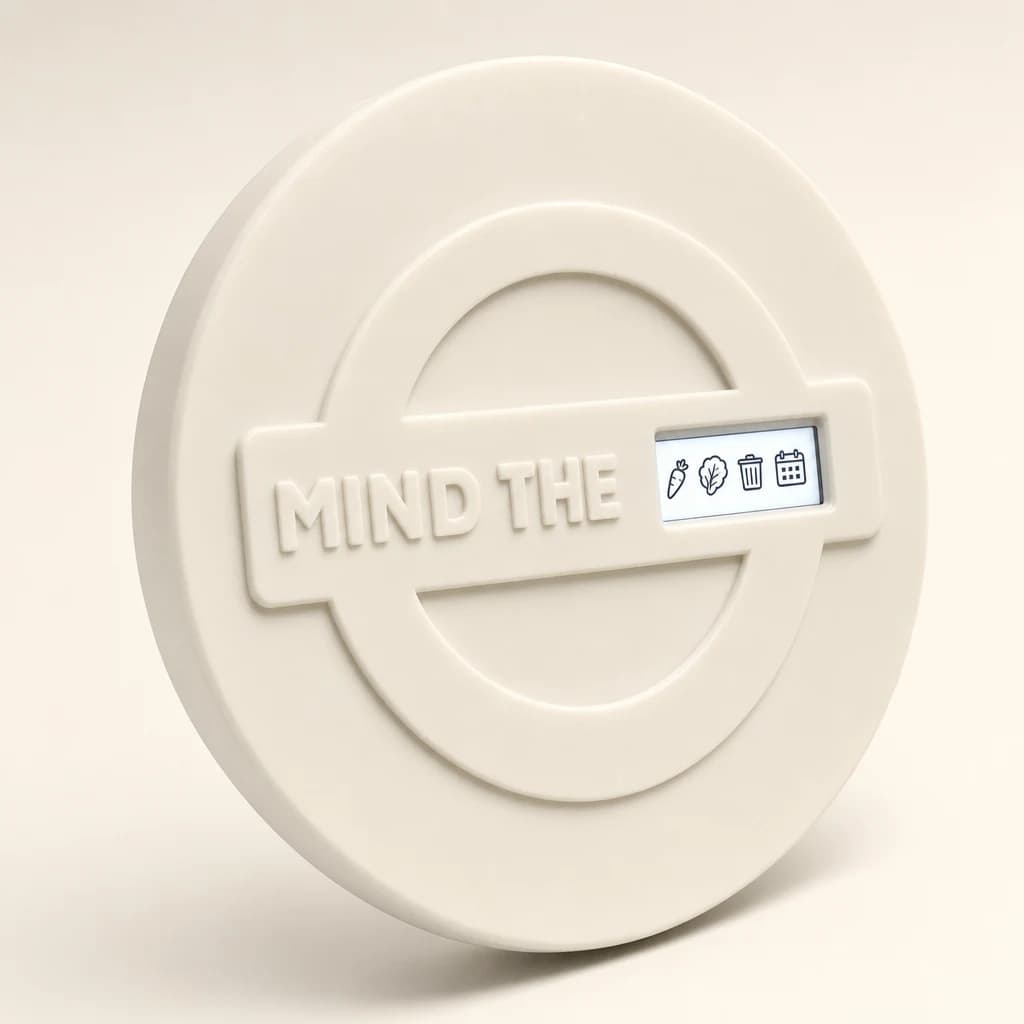
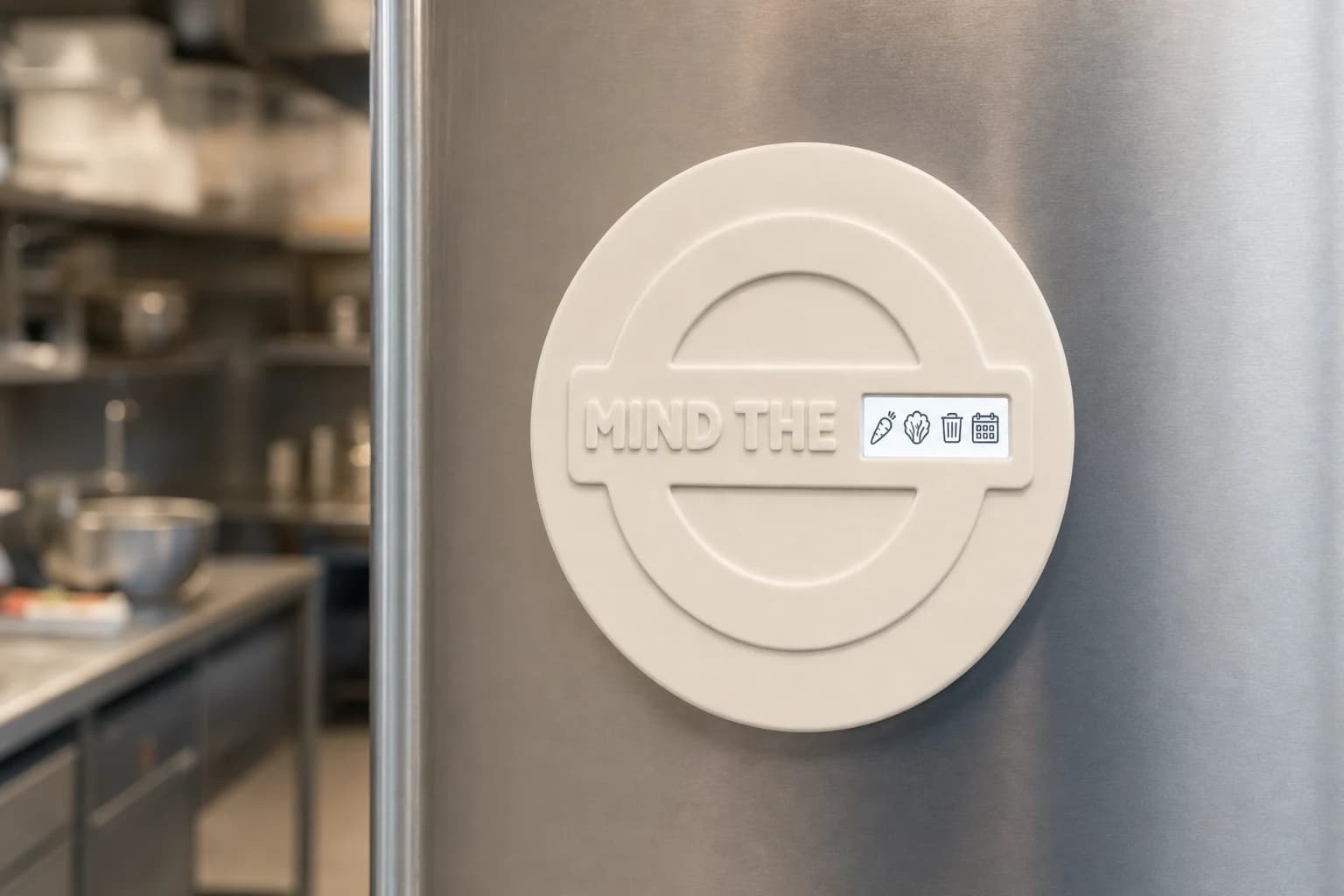
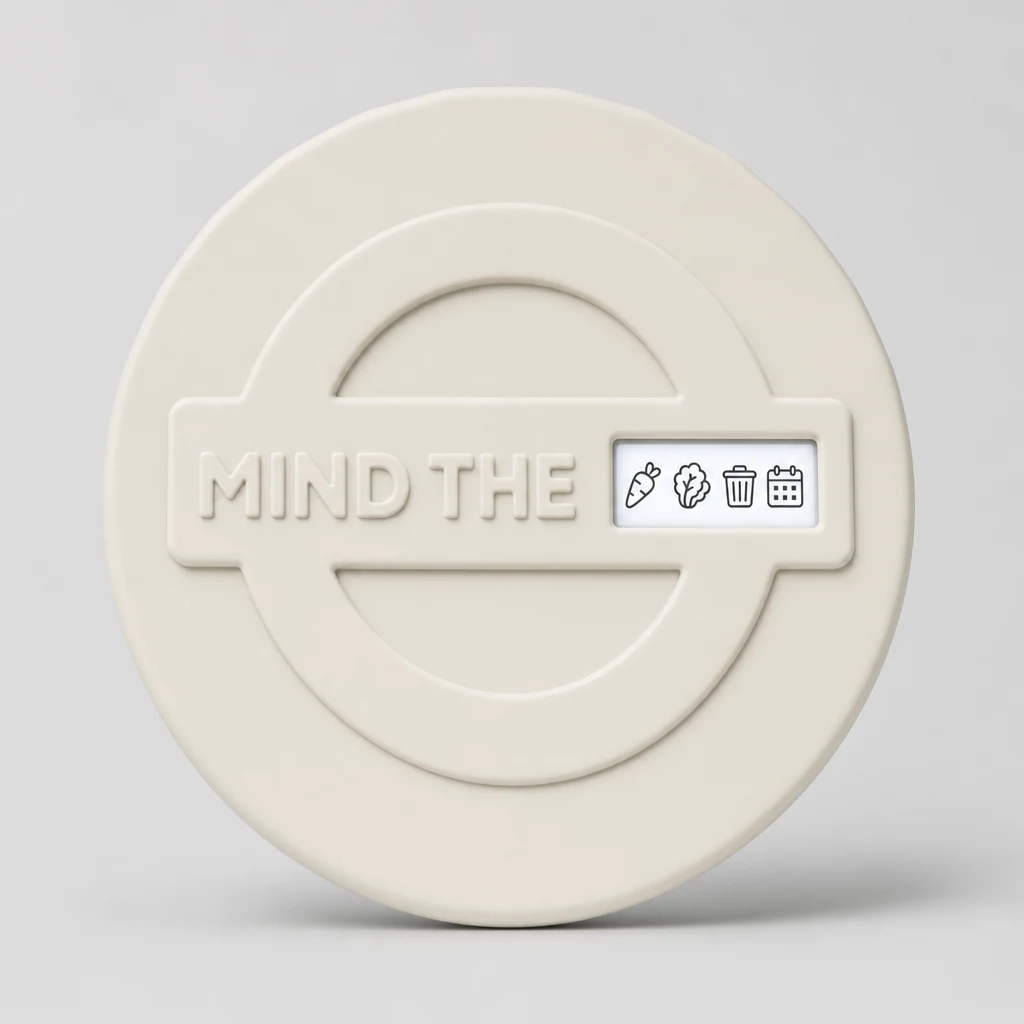
Images on this page are concept renders of the production finish. Prototype units are 3D-printed and differ in material, colour and display behaviour.
Magnet
Goes on the door, no tools
On-screen
Readable without an app
Logged
Readings land in your workspace
Prototype
Design partners onboarding
Waste happens quietly
Nobody throws food away on purpose. It goes off at the back of a shelf, behind something else, on a shift when the person who bought it is not in. By the time anyone notices, the only decision left is which bin. Mind the Waste exists to move that decision earlier, to the point where the stock is still worth something.
It sticks to the door
No drilling, no bracket, no engineer visit. It goes where your team already looks, at eye height on the front of the fridge.
It reads out on its own screen
The current state is on the face of the device in plain language and colour. Nobody has to open an app to find out whether something needs attention.
It logs the conditions inside
Readings are timestamped and sent to your HeySalad® workspace, so you get a history for each unit rather than a single moment in time.
It tells you which shelf to use up
The point is not the number on the screen. It is the nudge that gets the stock used while it is still stock.
What we are still building
We would rather tell you where the prototype ends than have you find out after it is on your fridge. The current units read air quality inside the cabinet as a stand-in while we select the spoilage sensor, so treat the list below as work in progress rather than shipped features.
Spoilage-gas sensing
Food gives off volatile organic compounds as it degrades, and that is the signal that actually tracks spoilage. Moving the prototype onto a VOC and eCO₂ sensor is the next hardware milestone.
Waste reporting per site
Turning the reading history into a waste figure a manager can be held to, and a trend line that shows whether a site is improving.
Linked to what is on the shelf
Pairing a unit with a HeySalad® AI Camera in the same fridge, so a spoilage signal can name the item rather than just the shelf.
Why it looks like that
The shape is a transport roundel, and the name finishes a sentence every commuter in London can already hear. “Mind the gap” works because it is a warning you absorb without reading it — which is exactly what a fridge door needs.
It is a magnet rather than a fixture on purpose. Kitchen equipment gets moved, swapped and replaced, and anything that needs a drill never gets installed in the first place.
A device on a fridge door has about two seconds of a chef’s attention. It has to be legible from across the kitchen, or it may as well not be there.
The Fridge Pair
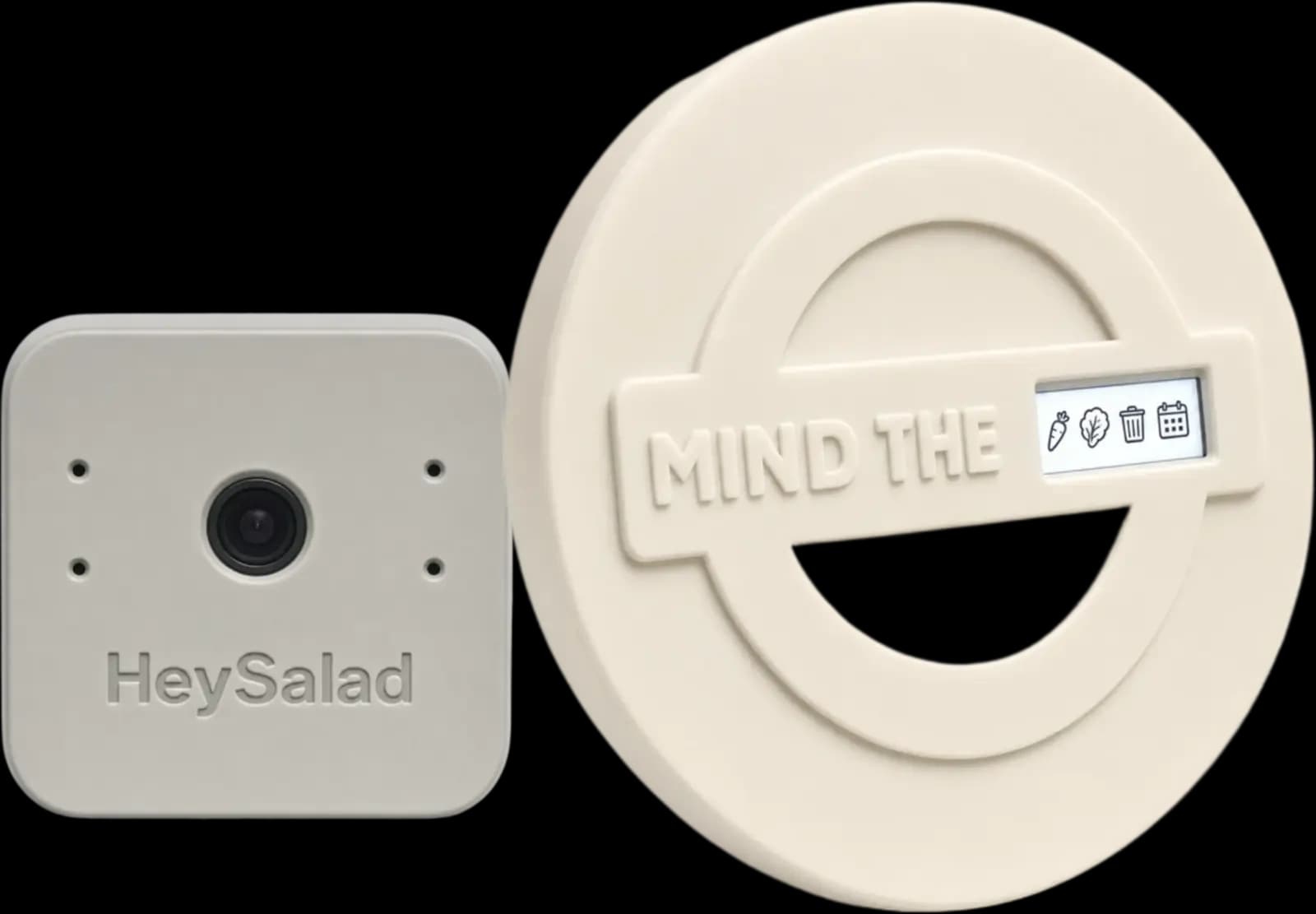
Two devices, one fridge. The AI Camera goes inside and counts what is actually on the shelf. Mind the Waste goes on the door and tells the team what to use up first. One looks, one speaks up.
Both are built on the same idea London has been refining for a century: that the only information a busy person absorbs is the kind they can read at a glance, sideways, in the half-second before they walk past. That is why one is a roundel on the door at eye height with icons instead of numbers, and why the other reports a count rather than a video feed. A kitchen at the end of a double shift has about the same attention span as a platform at rush hour.
Put one on your fridge
Design partners get early units, influence over the sensor decision, and the waste reporting built around how their kitchen actually runs.